Real estate investing in Central Virginia has never attracted more interest than it does right now. Between the remote work migration, the Caesars Virginia development in Danville, growing tourism at Smith Mountain Lake, and the region's natural affordability compared to coastal markets, investors from Richmond, Northern Virginia, and out of state are calling me every week asking the same question: "Should I flip or hold?"
It's a great question, and the honest answer is: it depends on your goals, your capital, your risk tolerance, and where in Central Virginia you're buying. Let me break down both strategies with real numbers from our market.
Strategy 1: Fix-and-Flip
The fix-and-flip model is straightforward: buy a distressed property below market value, renovate it, and sell it at a profit. In Central Virginia's 2024 market, here's what that looks like in practice.
A Real Example: Lynchburg Flip
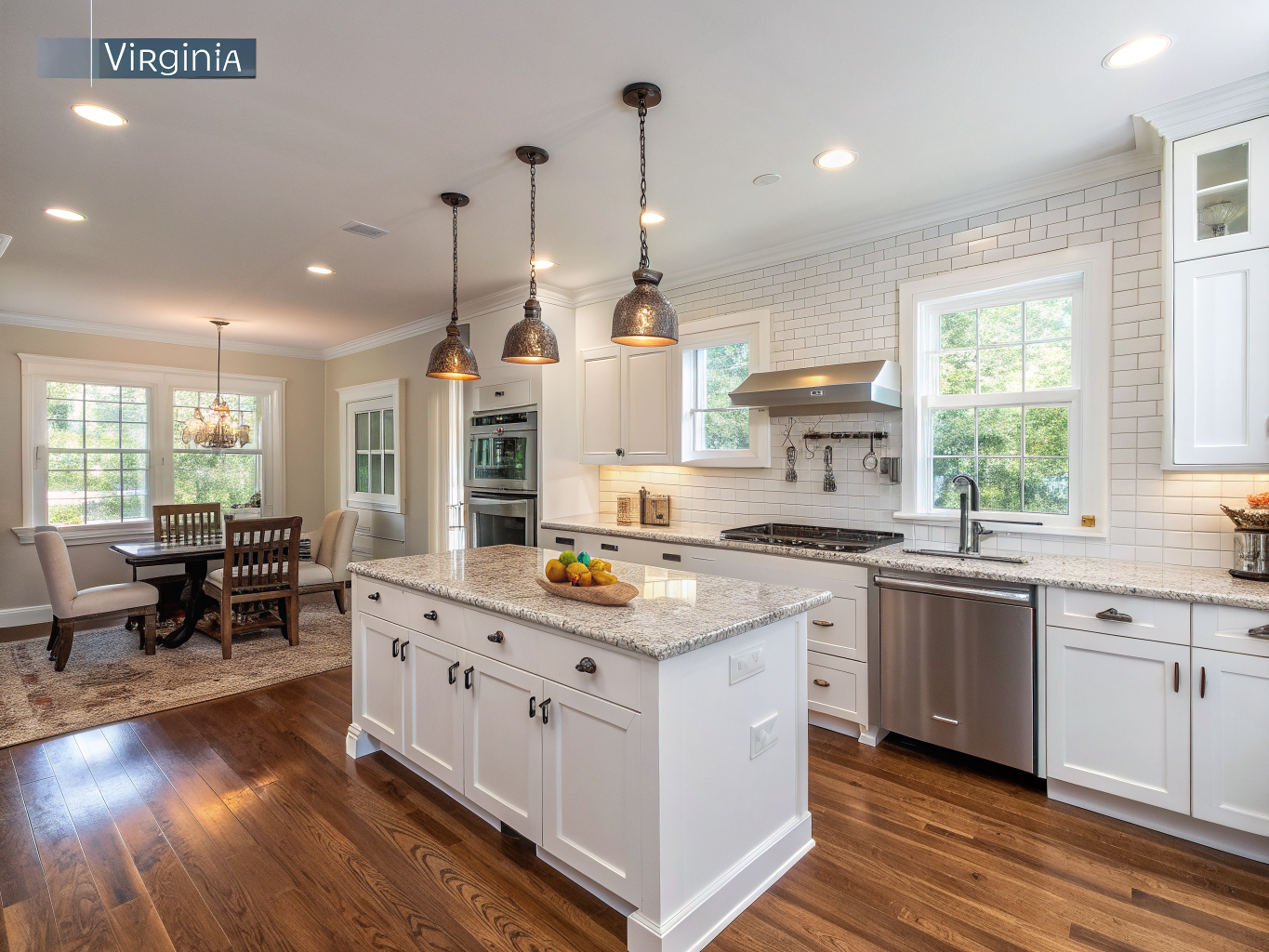
Last year, an investor I work with purchased a three-bedroom, one-bath ranch in Lynchburg's Old Forest Road area for $165,000. The home needed a full kitchen renovation, bathroom update, new flooring throughout, exterior paint, and landscaping. Here's how the numbers played out:
| Item | Cost |
|---|---|
| Purchase price | $165,000 |
| Closing costs (purchase) | $4,000 |
| Kitchen renovation | $22,000 |
| Bathroom update | $8,500 |
| Flooring (LVP throughout) | $6,500 |
| Exterior paint + landscaping | $7,000 |
| Electrical and plumbing updates | $4,500 |
| Holding costs (5 months: taxes, insurance, utilities, loan interest) | $8,500 |
| Staging | $2,000 |
| Total investment | $228,000 |
| Sale price | $289,000 |
| Closing costs + commissions (sale) | $17,500 |
| Net profit | $43,500 |
That's a solid return on a five-month project, roughly 19% return on total investment. But let me be honest about what this required: the investor had $228,000 in capital tied up (using a hard money loan at 12% interest plus their own cash for the down payment and rehab), they personally managed the renovation, and they got lucky with a contractor who delivered on schedule.
Where Flips Work Best in Central Virginia
- Lynchburg City ($250,000-$280,000 median): The best flip market in our area. Plenty of older housing stock from the 1950s-1970s that needs updating, and a strong buyer pool of young professionals and first-time buyers who want move-in-ready homes but can't afford new construction.
- Roanoke City ($260,000-$300,000 median): Similar dynamics to Lynchburg, with older neighborhoods ripe for renovation. The Grandin Village, Old Southwest, and South Roanoke areas command strong after-repair values.
- Campbell County: Lower entry prices and proximity to Lynchburg create good flip margins, especially along the Route 29 and Timberlake Road corridors.
Flip Risks in 2024
I want to be transparent about the risks, because too many investors jump in after watching HGTV without understanding the reality:
- Holding costs at current rates are brutal. Hard money loans are running 12-14% interest in 2024. Every month your project extends beyond your timeline, you're hemorrhaging money. A flip that takes eight months instead of five can easily eat $5,000-$8,000 in additional holding costs.
- Contractor availability is tight. Good contractors in Central Virginia are booked out. A kitchen renovation that should take three weeks can stretch to six if your contractor is juggling multiple jobs.
- Overimprovement is the silent killer. In a market where the median home price is $250,000-$280,000, putting $80,000 into a renovation on a $170,000 purchase doesn't leave room for profit. Know your ceiling before you buy.
- Rising material costs. Lumber has stabilized from its 2021 peaks, but cabinets, countertops, and appliances are still 15-20% above pre-pandemic prices.
Strategy 2: Buy-and-Hold Rentals
The buy-and-hold strategy is less glamorous but, in my experience, builds more lasting wealth for most investors. You purchase a property, rent it out, and benefit from monthly cash flow, mortgage paydown, tax advantages, and long-term appreciation.
A Real Example: Bedford County Rental
An investor purchased a three-bedroom, two-bath home in the Forest area for $310,000 with 25% down (investment property standard). Here's the monthly cash flow analysis:
| Item | Monthly Amount |
|---|---|
| Monthly rent | $1,850 |
| Mortgage (P&I, 7% on $232,500) | -$1,547 |
| Property tax ($0.53 per $100) | -$137 |
| Insurance | -$130 |
| Maintenance reserve (5%) | -$93 |
| Vacancy reserve (5%) | -$93 |
| Property management (8%) | -$148 |
| Net monthly cash flow | -$298 |
Yes, that's negative cash flow. And yes, I'm showing you this intentionally, because I believe in being honest with investors. At 7% mortgage rates, most single-family rentals in Bedford County's $300,000+ price range will not produce positive monthly cash flow when you account for all expenses including professional management.
But here's what that analysis doesn't capture:
- Mortgage paydown: Your tenant is paying roughly $400/month toward your principal in the first year, growing each year. That's $4,800+ in forced equity annually.
- Appreciation: At a conservative 4% annual appreciation, a $310,000 property gains $12,400 in value per year.
- Tax benefits: Depreciation, mortgage interest, and expense deductions offset the negative cash flow and then some.
- Eventual rate reduction: When rates drop (and they will eventually), refinancing turns that -$298 into positive cash flow.
Where Buy-and-Hold Works Best
- Lynchburg City: Lower purchase prices mean better cash-on-cash returns. A $220,000 home renting for $1,400-$1,500/month produces much better monthly numbers than the Bedford County example above. The university population (Liberty, UL, Randolph) creates consistent rental demand.
- Pittsylvania County: The Caesars Virginia casino is creating a wave of new employment. Workers need housing, and Pittsylvania's low entry prices ($200,000-$250,000 median) and $0.63 tax rate make the rental math work. This is one of the most undervalued rental corridors in Virginia right now.
- Campbell County: Higher property tax rate ($0.73 per $100) hurts margins slightly, but purchase prices are lower and rental demand from Lynchburg overflow is strong.
The Hybrid Approach: BRRRR in Central Virginia
Many of my most successful investor clients use the BRRRR method (Buy, Rehab, Rent, Refinance, Repeat). It combines the value creation of a flip with the long-term wealth building of a rental. Here's how it works:
- Buy a distressed property below market value (same sourcing as a flip)
- Rehab it to rental-ready condition (functional updates, not luxury finishes)
- Rent it at market rate to a qualified tenant
- Refinance based on the new appraised value, pulling out most or all of your original capital
- Repeat with the recovered capital
The BRRRR method works particularly well in Lynchburg and Roanoke, where you can find three-bedroom homes in the $140,000-$180,000 range that need $30,000-$50,000 in work, will appraise at $240,000-$280,000 after renovation, and rent for $1,300-$1,600/month. The cash-on-cash returns after refinancing can exceed 20% annually.
Short-Term Rentals: A Third Path
I'm dedicating a full blog post to short-term rental regulations later this summer (spoiler: it varies significantly by county), but the short version is this: if you're considering an STR near Smith Mountain Lake, Wintergreen, or along the Blue Ridge Parkway, the revenue potential is 2-3x what you'd earn from a long-term tenant. A lakeside home that rents for $1,800/month to a long-term tenant can generate $4,000-$6,000/month on Airbnb during peak season (May-October).
The trade-offs are higher management intensity, seasonal vacancy, and navigating county-specific permitting requirements. But for the right property in the right location, STRs are the highest-return strategy in our market.
Which Strategy Is Right for You?
| Factor | Fix-and-Flip | Buy-and-Hold | STR |
|---|---|---|---|
| Capital needed | High ($150K-$250K per deal) | Moderate (25% down) | Moderate-High (down payment + furnishing) |
| Time commitment | Active (3-8 months per project) | Passive with management | Semi-active or managed |
| Risk level | Higher (market timing, renovation risk) | Lower (long-term hold smooths cycles) | Medium (regulatory, seasonal) |
| Best for | Active investors wanting lump-sum returns | Wealth builders seeking passive income | Hospitality-minded investors in tourism areas |
| Best Central VA markets | Lynchburg, Roanoke | Lynchburg, Pittsylvania, Campbell | SML, Wintergreen, Blue Ridge Parkway |
Getting Started
Whether you're a first-time investor or adding to your portfolio, Central Virginia's combination of affordable entry prices, strong rental demand, and growing tourism economy makes it one of the most attractive investment markets in the Mid-Atlantic. The key is matching the right strategy to the right location with the right numbers.
I work with investors regularly and can help you identify properties, run the numbers, connect you with reliable contractors and property managers, and navigate the local market. Real estate investing is a team sport, and I'd be honored to be on yours.
Teresa Grant is the Team Lead of The Realty Group Team at Keller Williams in Central Virginia. For a free investment property consultation, visit therealtygrouponline.com.