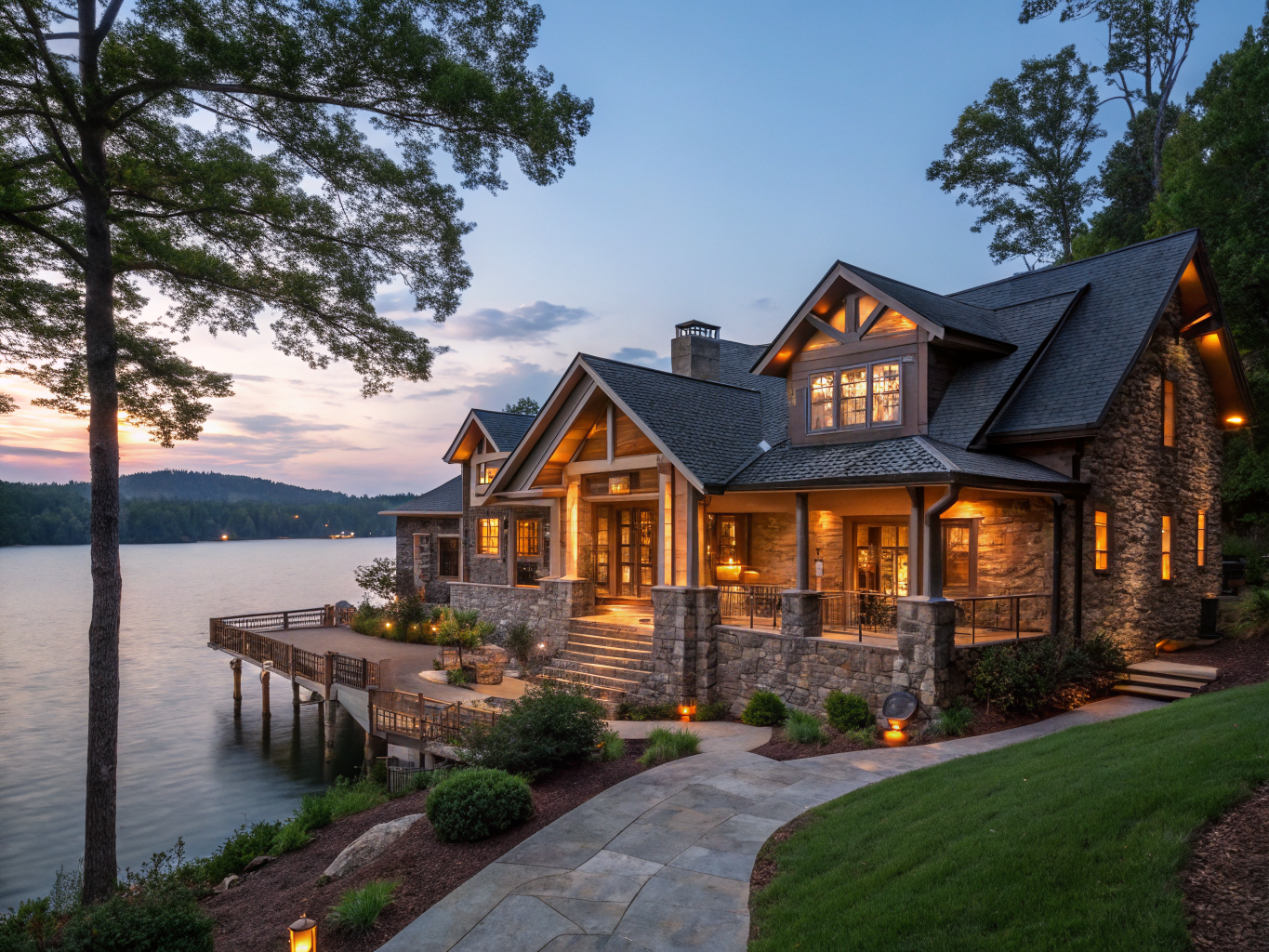
Smith Mountain Lake waterfront property is one of the most desirable real estate categories in all of Virginia. With a 2023 median price around $825,000 and appreciation of 57.1% since 2019 when the median sat at roughly $525,000, lakefront homes represent both a significant lifestyle upgrade and a substantial financial investment.
But buying waterfront is fundamentally different from buying a home in a subdivision. There are layers of regulation, permitting, and community governance that can surprise even experienced buyers. I've helped hundreds of families purchase lakefront homes over the years, and I want to share everything you need to know before you sign that contract.
Understanding Smith Mountain Lake's Structure
Smith Mountain Lake is a 20,600-acre reservoir created by Appalachian Power Company (AEP) in the 1960s when they built the Smith Mountain Dam and the Leesville Dam. This matters because AEP holds the Federal Energy Regulatory Commission (FERC) license for the lake, which means they have significant authority over what happens along the shoreline.
The lake spans three jurisdictions:
- Bedford County (north and east shore)
- Franklin County (south and west shore)
- Pittsylvania County (southeastern arm)
Each county has different tax rates, zoning rules, and building regulations. A home in a Bedford County cove is governed by different rules than one across the lake in Franklin County. Understanding which jurisdiction your property falls in is the first step in any waterfront purchase.
Dock Permits: The Single Most Important Issue
Every dock on Smith Mountain Lake requires a permit from AEP through their Shoreline Management Plan. You cannot simply build a dock because you own waterfront property. Here's what you need to know:
New Dock Permits
- Application process: Submit through AEP's Shoreline Management Office. Expect a 60-90 day review period.
- Shoreline classification: AEP classifies every foot of shoreline. Some areas allow docks, others don't. Always verify the classification before purchasing.
- Size limitations: AEP regulates dock size, typically limiting structures to a reasonable footprint based on water depth and cove width.
- Setbacks: Your dock must maintain certain distances from neighboring docks and property lines.
- Environmental review: Some locations require additional review for habitat protection.
Existing Dock Transfers
When you buy a waterfront property with an existing dock, the dock permit transfers to you, but it's not automatic. You must notify AEP and update the permit records. I always include dock permit verification as part of my due diligence for waterfront buyers.
Red Flags to Watch For
- Unpermitted docks: Some older docks were built without proper permits. AEP can require removal of unpermitted structures. Always verify permit status.
- Shared docks: Some properties share dock access with neighbors. Understand the legal arrangement and any associated costs before purchasing.
- "Dockable" vs. "Dock in Place": A property described as "dockable" means a dock permit could be obtained, but hasn't been. A property with a "dock in place" has an existing permitted structure. The difference matters enormously.
Shoreline Management: What You Can and Can't Do
Owning waterfront doesn't mean you own the water. AEP's Shoreline Management Plan governs what you can do within the project boundary line, which typically extends from the 800-foot elevation contour to the water's edge.
Vegetation
You cannot clear-cut the shoreline. AEP requires a vegetative buffer along the waterfront to prevent erosion and protect water quality. You can selectively trim and create view corridors, but wholesale tree removal will result in violations and required replanting.
Seawalls and Riprap
Erosion control along your shoreline requires an AEP permit. Seawalls, riprap (large stone placement), and other stabilization methods must be approved before installation. Unpermitted seawalls can result in removal orders.
Boat Lifts and Watercraft
Boat lifts are typically included under your dock permit, but additional structures like jet ski lifts, swim platforms, or boat houses may require separate approval. If you're planning a lift for a large pontoon or wakeboard boat, verify the dock's approved capacity.
HOA Rules: Community by Community
Many of Smith Mountain Lake's premier communities have HOAs with their own rules layered on top of county and AEP regulations. Here's a sampling of what to expect in some of the most popular communities:
The Waterfront
This 750-acre ultra-exclusive community has one of the more comprehensive HOAs on the lake. The Waterfront Country Club offers a 7,000-yard PGA Championship golf course, 22,000-square-foot clubhouse, Olympic-sized pool, and tennis courts. HOA fees cover common area maintenance, road maintenance, and community amenities. Some membership categories include mandatory club membership fees separate from the HOA.
Bernard's Landing
Bernard's Landing is a resort-style community with condos, townhomes, and single-family homes. The HOA manages swimming pools, tennis courts, a restaurant, and marina facilities. Rental restrictions vary by section. Some buildings allow short-term rentals; others are owner-occupied only.
Mariner's Landing
A gated community with a golf course, pool, and marina. Mariner's Landing has undergone significant renovation and investment in recent years. HOA fees and rules reflect the resort-community model with assessments covering amenity maintenance and road upkeep.
The Cottages of Contentment Island
Sixty-two waterfront townhomes, each up to 5,000 square feet with walking trails, pool, and tennis. The HOA here governs a tighter community with consistent architectural standards.
Copper Cove at Westlake
A newer community near the Westlake area with modern construction and community amenities. HOA rules tend to be well-documented and straightforward.
What to Ask About Any HOA
- What are the monthly or annual fees, and what do they cover?
- Are there special assessments planned or recently levied?
- What are the rental restrictions (daily, weekly, monthly minimums)?
- Are there architectural review requirements for exterior changes?
- What are the dock and boat storage rules?
- Is there a mandatory club membership?
- What's the HOA's reserve fund status?
Short-Term Rental Regulations
If you're considering using your SML waterfront property as a vacation rental (even part-time), the regulatory landscape varies significantly by county:
| County | STR Requirement | Details |
|---|---|---|
| Bedford County | Conditional Use Permit (CUP) | Requires application, public hearing, and Board of Supervisors approval. Not guaranteed. |
| Franklin County | Special Use Permit (SUP) + Business License | Two-step process: SUP from Planning Commission, plus a county business license. |
| Pittsylvania County | Zoning Permit | Must verify property is in a zone that allows short-term rentals. |
Many HOAs have their own rental restrictions that may be more restrictive than the county. Always check both the county regulations and the community's CC&Rs before assuming you can operate a rental.
Insurance Considerations
Waterfront properties have unique insurance needs:
- Flood insurance: Most SML waterfront properties are in or near FEMA flood zones. Flood insurance is typically required by lenders and can add $1,500-$3,000+ annually depending on elevation and flood zone classification.
- Dock and boat coverage: Your homeowner's policy may not cover your dock, boat lift, or watercraft. Verify coverage or add endorsements.
- Liability: A dock is an attractive nuisance. If a neighbor's child swims up to your dock and gets injured, you could be liable. Adequate liability coverage is essential.
- Replacement cost: Waterfront homes often have custom features (built-in boat storage, stone seawalls, custom docks) that a standard policy may undervalue. Work with an agent who understands lakefront construction costs.
Well and Septic: The Reality of Lakefront Living
Most SML waterfront properties are on private well and septic systems, not public water and sewer. This is one of the biggest adjustments for buyers coming from urban areas.
- Well water testing: Always test well water for bacteria, minerals, and flow rate before closing. Some areas around the lake have high iron or sulfur content that requires treatment systems.
- Septic inspection: A septic inspection is non-negotiable for any waterfront purchase. A failing septic system on waterfront property is both an environmental hazard and an expensive repair (often $15,000-$30,000+ for a new system).
- Drainfield location: On steep waterfront lots, drainfield placement can be challenging. If you're planning to expand the home, verify that the lot can support an upgraded septic system.
The Investment Case
Despite all the complexity, SML waterfront has been one of the strongest real estate investments in Virginia. The numbers speak for themselves:
- 2019 median: ~$525,000
- 2023 median: ~$825,000
- Appreciation: 57.1% over four years
Supply is inherently limited. They're not making more waterfront. The lake's 500 miles of shoreline are fixed, and the combination of COVID-era migration (15.6% population growth), remote work flexibility, and the lake's growing reputation has created sustained demand that shows no signs of reversing.
My Advice to Waterfront Buyers
After years of helping buyers navigate SML waterfront purchases, here's my checklist:
- Verify the dock permit status before falling in love with the house.
- Understand the AEP shoreline classification for the specific property.
- Read the HOA documents completely, especially rental restrictions and architectural standards.
- Get a septic inspection and well test from qualified professionals.
- Check the flood zone classification and get an insurance quote before your offer.
- Understand which county the property is in and the implications for taxes and regulations.
- Visit at different times of day and week. A cove that's peaceful on Tuesday morning may be a wakeboard highway on Saturday afternoon.
- Work with an agent who lives at the lake. I say this not as a sales pitch but as genuine advice. SML waterfront is specialized real estate, and the nuances matter enormously.
Smith Mountain Lake waterfront is worth every bit of the complexity. There is nothing quite like sitting on your dock at sunset, watching the Blue Ridge turn purple behind the dam, and knowing you're home. But go in with your eyes open, and you'll enjoy that sunset without any surprises.
Ready to explore SML waterfront? Let's start with a conversation about what you're looking for, and I'll guide you through every step.
Teresa Grant is the Owner and Luxury Listing Specialist at The Realty Group Team, Keller Williams. She resides at Smith Mountain Lake and has specialized in lakefront real estate for over two decades.